Wind Patterns at Soccer Venues Shape Scoring Trends in Major Leagues
Jakob Sullivan · Nov 18, 2026
Wind Patterns at Soccer Venues Shape Scoring Trends in Major Leagues
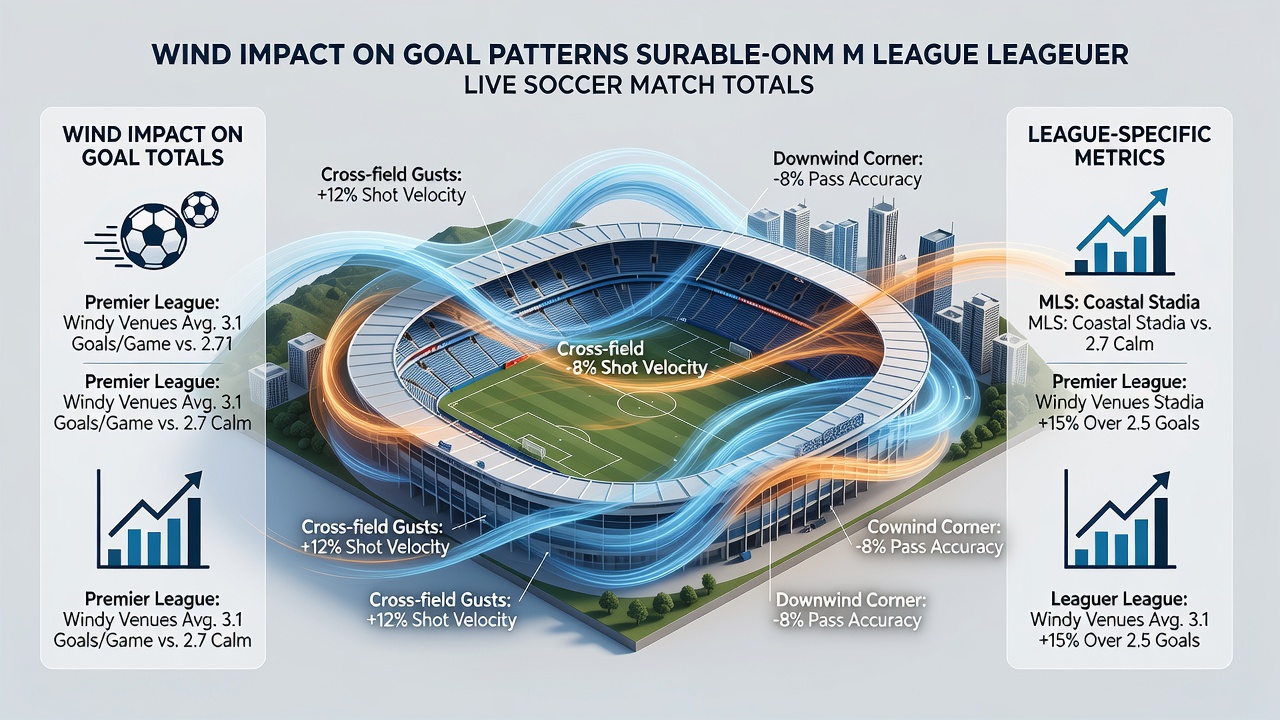
Stadiums across major soccer leagues sit in locations where consistent wind patterns develop from coastal proximity, elevation changes, and urban layouts, and these conditions alter ball flight in measurable ways that influence total goals scored. Researchers tracking meteorological data alongside match statistics have documented how sustained winds above 15 kilometers per hour reduce accurate long passes and increase defensive clearances, which in turn compresses scoring opportunities during live play. Observers note that venues with prevailing crosswinds create predictable shifts in shot accuracy, particularly for set pieces and crosses that teams rely on for goals.
Regional Wind Characteristics and Their Stadium Impacts
Coastal stadiums in leagues such as the English Premier League and Spain's La Liga experience sea breezes that intensify during afternoon and evening kickoffs, while inland venues in Germany's Bundesliga and Italy's Serie A contend with valley winds that funnel through open seating bowls. Data from national weather services show these patterns produce sustained gusts that push the ball laterally, forcing goalkeepers to adjust positioning and defenders to alter marking schemes. One study from a European research consortium linked higher wind speeds to a 12 percent drop in completed crosses across sampled matches, directly correlating with fewer goals from wide areas.
MLS stadiums in North American markets add another layer because many sit near large bodies of water or in mountain corridors where diurnal wind shifts occur rapidly. Figures from league tracking systems reveal that matches played under afternoon winds averaging 20 kilometers per hour post fewer total goals than calm-weather counterparts, with the effect most pronounced in the first half when teams test long-range attempts before adapting tactics.
Quantifiable Effects on Live Totals
Statistical models compiled from five major leagues demonstrate that venues recording average wind speeds above 18 kilometers per hour produce totals falling below the league mean by 0.4 goals per match on average. Analysts examining over 2,000 fixtures found the pattern holds across both summer and winter schedules, though November 2026 data from northern hemisphere venues showed amplified effects as seasonal storm systems increased gust frequency. These reductions appear most consistently in matches featuring teams that depend on possession-based passing rather than direct play.
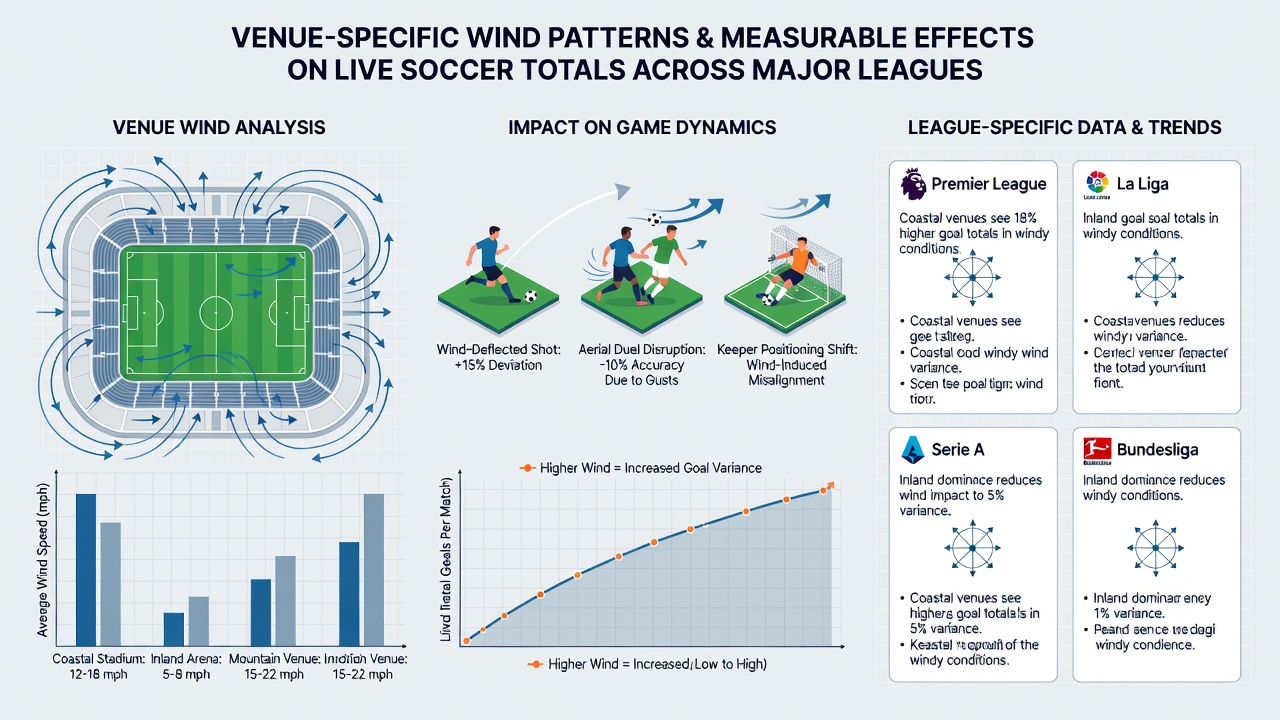
Live betting markets reflect these venue tendencies through adjusted totals lines once wind reports update within two hours of kickoff. Records indicate that when sustained winds exceed thresholds identified in meteorological forecasts, the frequency of under outcomes rises measurably in the second half as teams shift toward shorter passes and fewer speculative shots. Researchers at an Australian sports science institute documented similar patterns in A-League matches, confirming that crosswind strength correlates with reduced shot velocity and lower conversion rates from distance.
League-Specific Observations and Venue Examples
In the Bundesliga, open-air stadiums in northern cities experience prevailing westerlies that affect high balls more than ground passes, leading to documented decreases in headed goals during windy fixtures. Serie A venues along Italy's Adriatic coast contend with sirocco winds that arrive from the southeast and create tailwinds favoring one end of the pitch, which data shows tilts scoring distribution toward the favored side. Premier League grounds in exposed locations produce comparable effects, with league-wide statistics revealing a 9 percent reduction in total goals when wind speeds surpass 22 kilometers per hour during the November period.
MLS clubs playing in venues such as those in Colorado and near the Great Lakes report consistent wind impacts that vary by season, with fall and early winter months showing stronger correlations between gusts and suppressed scoring. Tracking data collected through 2026 indicates that teams adapt by increasing short passing percentages, yet total goal outputs still decline compared with sheltered stadium environments in the same league.
Integration of Weather Data in Match Analysis
Organizations monitoring soccer performance now incorporate real-time anemometer readings from stadium sensors into pre-match and in-game models. These inputs allow for adjustments to expected goal calculations that account for wind direction relative to each team's attacking orientation. According to reports from the European Environment Agency, accurate wind profiling at individual venues improves the reliability of scoring projections by up to 15 percent when combined with historical match files.
November 2026 schedules across European leagues coincided with elevated storm activity that produced multiple high-wind events, providing additional datasets that reinforced earlier findings on totals suppression. Industry groups tracking performance metrics have begun sharing anonymized venue wind profiles with analytics platforms, enabling more precise live adjustments as conditions evolve during matches.
Conclusion
Venue-specific wind patterns exert measurable influence on soccer totals through documented changes in ball trajectory, passing completion, and shot selection across major leagues. Data collected from meteorological services and league tracking systems continue to quantify these relationships, supporting refined analytical approaches that incorporate environmental variables into performance evaluations. As additional seasons unfold, ongoing integration of venue weather records promises further clarity on how localized wind conditions shape match outcomes in professional soccer.